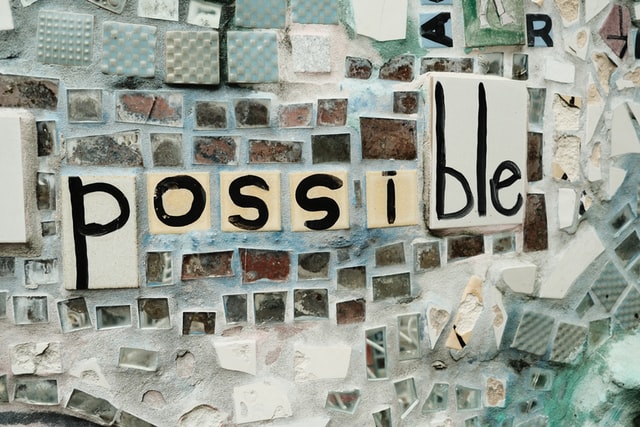
The author talks about the beauty of outtakes, compassion for the self and, well, the possibility of everything (in writing).

HOPE EDELMAN is the author of five nonfiction books, including the bestsellers The Possibility of Everything, Motherless Daughters, and Motherless Mothers. Her articles and essays have been published in numerous newspapers and magazines, and her work has appeared in anthologies ranging from The Bitch in the House to Racing in the Street: The Bruce Springsteen Reader.

MEREDITH: You’ve written extensively, poignantly about the loss of mothers. Shifting your perspective onto writing, can you tell me what it feels like to let go of a piece of work that is meaningful to you, but that isn’t working. Do you become attached? How have you learned to release and find serenity in doing so? Please share.

HOPE: In my first editorial job, at a publishing company in Knoxville, Tennessee, a very wise editor once told me, “Readers will never know what you took out.” I remind myself of that often when writing, particularly when I need to omit a scene or a chapter I personally like but that isn’t serving the  essay or book the way it should. Every time I write a book I create a file called “Outtakes” where I move all the material I’ve had to remove from the manuscript. That’s just in case I can find a place for those descriptions or scenes in another essay or book later down the road, though I almost never can.

The biggest challenge, I find, is to omit material in a way so the reader doesn’t know it’s gone, but also doesn’t feel as if something important is missing. If, for example, I edit out a scene of conflict because it isn’t working the way it needs to, I have to be sure that there’s still enough conflict in that chapter for the narrator’s actions or motivations to still make sense to the reader.

It’s harder to let go of an essay I believe in but that just isn’t working at a particular moment in time. Often that’s because I don’t yet have enough distance, perspective, and insight with regard to the events; or because the real-life story is unfinished; or for some unknown emotional reason deep within my psyche that I may or may not figure out over time. Sometimes it’s because the essay isn’t worthy of being a standalone piece and I haven’t yet figured out what other storyline to pair it with. And sometimes it’s because I just don’t have the skill or the knowledge base to pull off writing about that material in a meaningful way.

When I stop writing a piece midstream, I try to think of it not as an act of abandonment, but an act of postponement. I’m putting it away to look at again at a later date, to see if it can be resurrected then. Sometimes it can, but sometimes I have to put it back on the shelf for a while longer. Maybe that stems from my inability to let go of things I really love, but I think it’s actually more an agreement with myself that I came to over time, when I realized that even though a story may have taken place twenty years ago I still may not be ready to write about it yet.

MEREDITH: What is going on inside the writer when we hear that he/she has hit his/her stride? Can you describe how this happens? Did you have a sense this was happening as you wrote?  Was there a turning point?

HOPE: I think it’s the moment when a kind of inner synergy emerges between the writer and her material, and whatever struggles she was experiencing with the writing dissipate and the words begin to flow uninterrupted and freely. I’ve heard some writers talk about it as the moment when they feel they’ve reached out and grabbed on to an outer creative source, but I believe it’s the moment when we connect with a creative source within ourselves. If you believe in the tripartite idea of a Higher Self, a Middle Self, and a Lower Self all coexisting in us all, with the Middle Self being the everyday persona we reveal to the world, I think hitting one’s stride as a writer are moments when our Middle selves and Higher selves align, and we begin writing from a consciousness that we’re otherwise not able to access on an everyday plane.

I was very much aware when this happened during the writing of my first book, Motherless Daughters. For the first five chapters I’d struggled—oh my god, how I’d struggled—with how to blend memoir, interviews, and research in a way that would feel seamless to readers. There weren’t many good models for this kind of writing at the time. This was back in 1992, 1993. My chapters were coming out choppy and uneven, jerking back and forth between the different components. And then, when I was writing the sixth chapter, something just clicked. I found myself able to shape the material into a cohesive whole in a way I hadn’t been able to before. When I finished that chapter I immediately sent it to my editor and she called me right away and said, “You’ve got it!” I asked if I should go back and rewrite the first five chapters and she said, “No—just keep going. You can go back and fix them later.” She wanted me to keep the momentum going.

MEREDITH:  When I first started writing personal essays I was surprised at how personal the process was—to me. (I know, it sounds strange.) I was most timid of what I’d reveal to myself about myself. You’ve written on personal subject matter before, but what was the process of navigating such personal subject matter like, on the page, in your memoir?

HOPE: Honestly? It was brutal! My memoir is set nine years ago, at a very low point in my life as a mother and wife. Because I chose to write the story in the present tense it was important for me to go back and re-inhabit the person I was back then and write from her point of view. Nine years later, mostly as a result of what happens in the book, I have a very different outlook on just about everything, and it was emotionally very, very difficult for me to write from the perspective of who I was before we made our journey to Belize. I rediscovered parts of myself that I didn’t like very much, and I found myself judging my younger self rather harshly. My initial impulse was to gloss over moments in the story when I was acting entitled or ungrateful, but I knew that wouldn’t be telling an honest story to readers. So I put those moments in anyway, even though some of them made and still make me cringe. To do this, I had to own those behaviors and find compassion for a younger self who’d been trying to navigate motherhood and marriage without much guidance, instead of depicting myself with the kind of tough-chick exterior I’d publicly adopted at the time. Some readers have judged me as a character as harshly as I first judged myself, but many others have written to tell me how much they appreciated my honesty in depicting myself as imperfect because it helped them feel better about their own perceived shortcomings.

Still, that was very hard stuff to grapple with as I was writing. I didn’t have to just portray myself as a character, I had to understand and accept myself as a character, which is something all memoirists have to face when they commit to writing an honest self-portrait, I believe.

MEREDITH: As an author with many projects in motion, many platforms at work and many works in the public eye, how do you balance the left-brain activity of promotion with the right-brain activity of creation? Does it feel like you are moving forward on parallel tracks or is the process more unified and seamless?

HOPE: It’s felt more like alternating tracks this time around. My last book came out in 2006, and I was responsible for creating a web site and cultivating a discussion forum and mailing list, but the publisher took care of the majority of marketing and promotion. By 2009, authors were expected to be much more involved with promoting their books, with blogging, Tweeting, Facebook-ing, Goodreads, Redroom.com, etc. etc. etc. I find the acts of writing and promoting each to be so absorbing that they become mutually exclusive, and if I try to do both at the same time I don’t do a particularly good job at either. So when I’m promoting I don’t try to produce any writing, and when I’m writing I have to stop thinking about and engaging with promotion. I don’t really balance the two very well; I bounce back and forth between them, instead. I wonder sometimes if the most successful authors in the future will be the ambidextrous ones,  or if the pendulum will eventually swing back to allow authors to be predominantly the means of creation again rather than also being the means of promotion. I think we’ll know the answer to that before long.

Equally challenging for me has been to find the right balance between the Motherless Daughters work I’ve done for the past 15 years and the literary memoir I just published and have been promoting. Although the theme of mother loss is very much evident in The Possibility of Everything, it’s a very different book than the others I’ve written and has attracted a different audience. I have two web sites, one just for The POE and the other a more all-purpose web site for my workshops, articles, and other books, but I have the same blog and mailing list for all my readers. (That’s mainly because I can barely find enough time to keep up with one newsletter and blog, let alone two!) And then I also have all the writing students I’ve taught over the years, and the contacts I’ve made through the Maya Spiritual Healing community. So I have to really plan and think about what kind of news and updates will appeal to everyone each time I communicate with readers.

MEREDITH:  Does your creative process come from a place of something that scares you or from a familiar place of strength? Is this a constant? Does it change?

HOPE: I’d love to say it comes from a place of strength because that would make me sound like a warrior writer, but in truth I think it comes from a place of vulnerability, a place of uncertainty, a place that scares me because it’s so full of the unknown. That’s probably why I think of writing as an act of faith, because it requires us to immerse ourselves in this place and stay there for an unspecified period of time. When I go in, I don’t know where the exit route is or what it will be. I have to have faith that I’ll find it, every time, through the audacious act of pulling words from the ether and arranging them in a pattern that will lead me out. Hopefully it’ll be a pattern that will create a path for readers to follow as well. Hopefully.

That’s what we’re all striving for as authors, isn’t it? To create something lasting, something uplifting, something that will have a positive effect on others, out of what initially seems like nothing at all. It’s exactly as impossible and as attainable and as magnificent as it sounds.

HOPE has been teaching nonfiction writing for more than twenty years, and can be found every July at the Iowa Summer Writing Festival. The rest of the year she lives in Topanga Canyon, California, with her husband, their two daughters, two crazy cats, and a pet tarantula, Billy Bob.

Bookmark and Share

{ 12 comments }

Email This Post to a Friend

The writer goes deep about finally trusting her own style, writing what you absolutely love to read and how to make it happen—no matter what. Oh, and Richard Ford.

ANDREA GILLIES’ diverse career includes theatre publicity work, reference book editing, and writing a drinks column for Scotland on Sunday newspaper. Keeper (Short Books) her first book, about becoming a caregiver for her mother-in-law, won the inaugural Wellcome Trust Book Prize 2009 honoring science writing in popular literature.  The American edition of Keeper will be published by Broadway Books this summer.

Meredith: Caring for your parent-in-law and then, writing the memoir, how did you keep from abandoning yourself both on and off the page? How do you know what’s most important when you’re writing?

ANDREA: I had absolutely no idea what I was doing, when I suggested that we pool resources with my in-laws and move together to a big house in the far north of Scotland.  I’d been blocked as a writer for a long time, at the time that we moved. Blocked isn’t [exactly] the right word because in the years since giving up being a journalist-editor, to child-raise, and then to be a carer, I’d written two

Andrea Gillies

unpublishable novels and an unwanted (by editors) travel memoir of living in France. I wasn’t blocked exactly, but certainly in terms of the novels I’d written there was something fatally missing there, in terms of language, voice, commentary, analysis, and in the imagined world of the book. So many things that seem obvious now. I was so hungry to get the thing done and get the affirmation and move on to greater glory. What I produced didn’t really get under the surface of the narrative, and the world has enough shallow, surface-dwelling books.

I began to feel a sort of swelling and ripening: something I recognise now as a book pregnancy. Nancy [her mother-in-law] was passing into confusion and its concomitant hostility. She’d lost her prepositions: could no longer imagine on, off, under, up, down, behind. Words were deserting her but at the same time were swelling and ripening in me. Creative writing seeming impossible, I began to keep a diary of the day s.

Keeper didn’t start as a book, but as a book substitute. I’ve come to realise that writing a book substitute is a pretty good way of writing a book. It works: buy the notebooks, the pencils, open the notebook and write a sentence down, a good book opener. That’s maybe all you need. The subconscious will start its work, and one sentence spawns another. Write down everything that’s in your head, without worrying about quality. Make notes: if there’s a book hidden among th em it will show itself. It’s an approach that seems to be working well for the novel I’m writing now. I had a scenario, I had characters, but no real idea how to proceed. So I made notes on them and put them in rooms together and made them have conversations, and that’s how the arc of the plot came about.

I would sit with my mother-in-law in front of the fire, she in her mysterious world of disease-prompted thoughts, staring and muttering and winding her hair round her fingers; me with notebooks and laptop, disappearing down a wormhole out of the present. It wasn’t possible to get physically away – it was a 24/7 job most of the time – so all that was available was this dimensional, virtual escape route, into the world of words and thoughts. I interleaved accounts of what was happening to Nancy with research I’d been doing into the science of Alzheimer’s, and that turned out to be the Keeper format.

There wasn’t really any time: I had to make it happen in the interstices of obligation, so most of it was done early in the morning and late at night. I wrote and wrote and it poured out of me: “Keeper – the Director’s Cut” would be about 3000 pages long.


Meredith: What did you have to unlearn to find your truth as a writer? What had to go? Can you share how? Was there a turning point to your own narrative?

ANDREA: I’d always thought that writers are born and not made. There are lots of bad books out there by people who want to be writers but who aren’t really. But if you’d judged me by my output 5 years ago you would have put me in the same camp. Now I think differently. I think born and made can be the same thing and it can happen any time. If you have the drive to make sentences into pages, if that drive is strong in you, it is ‘just’ a question of finding your authorial voice, a thing way more elusive than mere subject matter. If people ask me who are my important writers I often say Carol Shields and F Scott Fitzgerald and Richard Ford – all Americans, and as Yoda might have said, The Voice Is Strong In Them.

It’s interesting, thinking about the things I now see I was doing badly in the books I thought I was writing five years ago. One of the things was trying to write in a style that wasn’t my own. I wanted to write popular fiction, and the novel I attempted was in that style: plot-led and conversational. That isn’t really me, though. I’m the kind of writer, it turns out, who likes to pause and pivot on a moment. I suppressed this, though, thinking it uncommercial. Now, anybody could have told me that what’s commercial is writing done in its own voice, writing that works, that rings true even though it’s a fiction.

Post-Keeper, I’m confident about writing about what people are thinking. I’m more interested in how people think than what happens to them. How they think and how wrong they can be about what’s happening. That’s what interests me as a reader, and that should have been a clue, all these years, to how I should have been writing. It’s obvious really, isn’t it? What you buy to read, what you gobble down in two days: that’s almost certainly a clue to what kind of writer you are.

But getting back to your question: what did I have to unlearn? I had to unlearn that I was a failure as writer, and that’s difficult. We carry our failures with us, far too much. People hug their failures tight and cherish them. They allow themselves to be defined by them.

I spent a lot of years postponing writing because the conditions weren’t

View from Andrea's garden, during the Keeper period.

right: too many interruptions, too many duties, no room of my own, no clear idea of what I was to write about – so many conditions were imposed by myself on myself. But I wrote Keeper on my lap in a series of notebooks while sitting with Nancy in front of medical soap operas. It can be done anywhere. And I’ve discovered lately that even if I’m not in the mood or haven’t a thought in my head, just opening the notebook and lifting the pen opens the channels.

Even if it’s not beautifully phrased and important-seeming stuff—and often it isn’t—something comes out of it, always: a glimpse, a phrase, a new idea. Progress of a sort is always made. I used to read writers and despair because I couldn’t match them for brilliance and polish. But polish is something that comes with writing drafts. Start with something, anything, and improve and improve it. Keeper went to four drafts in the end and the novel’s already on its 6th. The “first draft” that my agent read was the actual fifth.

Meredith: Was the process of writing the memoir more or less emotional than caring for your parent? When you wrote did you relieve, reevaluate or something else? Or was it done simultaneously? Where do you find perspective—and where did you lose it?

ANDREA: The process of writing Keeper was daily, it was fast, it was an outpouring (of facts) that turned pretty quickly into an unleashing (of a sensibility at work on the facts). It was an unemotional process and that was the point. Too many emotional days had left me drained. It was an antidote to that life lived with Nancy and her fears and accusations. It was a gloriously cool, cerebral thing. Cerebral and private. Nancy couldn’t find me there, in the sentence-making; she couldn’t touch it. And when you think about it, it was truly ironic that I should be finding solace from a dementia-carer’s life in precisely the activity that had most devastatingly been denied Nancy: the world of thinking and analysis and the sequential steps of creation. I was able to do that writers’ trick of giving random events shape and meaning and making cohesion out of chaos. It was as far away from Dementia-Reality, the Dementia-Culture, as it was possible to go without leaving the house.

It was tough on occasion being interrupted by Nancy while I was away off in my own world of words. But that wasn’t particular to being a dementia-carer, it turns out. I feel just the same now when I’m mid-sentence and in full flow and it becomes apparent that I need to do something else or pay attention to real people: that a child has been standing in front of me talking for 2 minutes and I haven’t noticed…There are always other things you ought to be doing.

Meredith: Some people refer to their creations as their children, but sometimes I see our creations more as an extension of our own biology. In other words, our words are who we are, just expressed in an alternate form (kind of like how water freezes to ice and then melts and flows again). How do you view your creations and how did you come to seeing them this way?

ANDREA: Ultimately, I write for psychic survival. I don’t know how else I would cope with the voices of the unlived lives and the unexpressed people that talk to me. I’m not talking about novels, or even about fictions when I say that.  I was trying to explain this to my (civilian) husband the other day: that I’m constantly narrating, whether I’m writing or not, and even as I’m living something I’m framing it into a paragraph. This can be a burden, though, as all of us know. It’s difficult to live properly in the present when you’re constantly roaming forward and back, stitch-stitch across the day: a person can suffer from too much perspective, too much overview: it can imbue life with too much distance and objectivity. Something I find borderline worrying about getting into writing as a life is that I need people less. The more involved I get in the narrative the less verbal I get. I feel bad when my husband confesses he thinks I’m growing withdrawn and possibly depressed, when the truth is that I’m very happily engaged in the world of my own secret narratives.

Meredith: What is your favorite writing quote of all time (at least for today!). Now answer this: do you live by it?

ANDREA: Favourite writer quotations change week to week, but this week’s is one from Richard Ford, a sentiment expressed by his hero Frank Bascombe in The Sportswriter:  “All we really want is to get to the point where the past can explain nothing about us and we can get on with life”.

I don’t know if this is true or not—knowing what I know now about memory and how crucial it is to identity. Our pasts are what we are. But I quote it to myself when I’m feeling dragged down by the old failures, and when the present feels too coloured by them. I started writing books aged 8 and have had my first commercial success 40 years later. The thing is just to keep going. Every time you pick up your pen is a new start. This seems like a banal sort of message but living as if it’s true is actually quite difficult.

ANDREA lives with her family in the UK where she’s at work on a novel. See what she’s up to any time by following her on Twitter.

Thanks, Andrea!

Photos courtesy of Andrea Gillies.

Bookmark and Share

{ 20 comments }

Email This Post to a Friend

Part 1: Sometimes money is just money

January 21, 2010

It started on Facebook, when someone commented beneath a link to The Money Study that “money is evil,” to which someone else replied: “Money is paper; people project their fears onto money, and that evokes evil acts.” That someone else was writer, Melanie Votaw, author of 11 nonfiction books and a nature photographer in New [...]

Read the full article →

The 5-Question [Author] Interview: Amy Friedman

January 17, 2010

The writer talks about her struggle with judgment, rejection and a personal policy when it comes to sending out a manuscript.
AMY FRIEDMAN has been writing the syndicated series Tell Me A Story since 1992, in collaboration with illustrator Jillian Gilliland. Together they have produced more than 1000 illustrated stories and two book collections, The Spectacular [...]

Read the full article →

Relationship conundrum: The fiction writer and her muse

January 15, 2010

by Kim Hooper
In writing, there is much discussion of “the muse.” Who is it? Do we wait for him/her/it to appear, or go to work anyway? Does the fact that we talk to this muse make us schizophrenic?
When I think of my muse, I think of a very lazy queen, sitting atop her canopy bed, [...]

Read the full article →

The 5-Question [Author] Interview: Novelist Ellen Meister

January 10, 2010

The author talks about her natural place as a writer, learning, unlearning and finding her way back and how she’s never been able to buy a thicker skin at Target. Oh, and Richard Yates.

ELLEN MEISTER is the author of two novels, Secret Confessions of the Applewood PTA and The Smart One, a Woman’s Day pick [...]

Read the full article →

I am in a relationship with money whether I want to believe it or not.

January 8, 2010

I hold onto my paychecks for weeks before depositing them. I, ahem, hoard them.
My most recent transgression of this nature occurred on New Years Eve day. I had the vague notion, as I was about to sit down and type my last invoice of 2009 for freelance work (I’m a writer and editor), that I’d [...]

Read the full article →

The Big Thank You List for 2009

January 8, 2010

(This post is back!)
I am indebted to many wonderful writers, editors and agents who helped make The Writer’s [Inner] Journey fly in 2009. I’m grateful to Amy Wallen, Barbara Bietz, Tom McCranie and Kim Hooper for all your help. Also to Ron Doyle and Jane Boursaw for knowing their stuff and our gang of bloggers [...]

Related Posts with Thumbnails
Read the full article →